Showing posts with label diy review. Show all posts
Thursday, April 13, 2017
DIY Review: Tangle-Free Headphones
I'm tired of my life being a meme. I found this DIY tutorial for tangle-free headphones on Society19, so hopefully now I can put my headphones in my backpack without stressing about what they're going to look like when I take them back out.
Materials:
-Anything with a cord. I'm using my headphones, and if it's a good DIY, I'm going to use it on my phone charger.
-Embroidery floss
-Clear nail polish or hot glue
Step 1: Tie a long piece of embroidery floss (about 3x the length of the cord you're covering) to the top of the cord. If you're familiar with the Chinese Staircase knot, that's what you need to do. If not, really all you're going to be doing is tying a knot with the embroidery floss around the cord. Easy peasy!
Step 2: When you've finished wrapping the cord, cut off any loose thread and apply some clear nail polish to both ends of the wrap.
Step 3: Repeat as necessary. Voila!
This was such an easy tutorial. It might have helped that I used this knot technique to make everything from bracelets to hair wraps when I was young. So far, my headphones have remained tangle free. They do twist around each other when I'm wearing them, but I guess that's far preferable to them growing into a knotted mess.
One thing I realized when I finished this DIY is that the wrap might help keep the wires in the cord from fraying. I don't know what I do with my cords that leads to the wires popping out, but at this point I'm desperate to do anything to keep that from happening.
It does look a little ridiculous up-close, but not so ridiculous that I won't wear them. If you're into hair wraps and other crafty gear, you might actually love this look.
DIY Rating: A-
Thursday, March 2, 2017
DIY Review: Washi Tape Nails
I've literally had "paint nails" on my list of things to do since I moved to New York 2 months ago. Since I've had it on my list for so long, I figured I may as well try out a cool new nail DIY to make this chore worth my while. I decided to try this washi tape nail art tutorial from Hello Little Home.
Materials:
- Washi tape
- Top coat (technically you're also supposed to use a base coat, but I just did my base with my top coat)
- Nail file
- Scissors
Step 1: Paint your nails with a base coat.
Step 2: Trim a piece of washi tape to fit your nail.
Step 3: Apply the washi tape to your nail. Make sure to smooth out any bubbles and the edges– you want the tape to stick completely to your nail so that it doesn't start to come off or get water under it when you wash your hands.
Step 4: Trim and file the tape to fit the tip of your nail.
Step 5: Cover the washi tape with a top coat. The tutorial calls for multiple coats, but I only used one because the nail polish made the colors on the tape bleed a little.
Voila! I love the way this looks and, immediately following the DIY, am already looking forward to using the rest of the washi tape in my collection in future manicures. However, the manicure lasted three days. It was pretty easy, but was too much effort for such a short reward. I wouldn't do this again unless I wanted an extra-special manicure for a short period of time.
DIY rating: C+
Categories:
diy
,
diy review
,
Lifestyle
,
nails
,
tutorial
Thursday, January 26, 2017
DIY Review: Scented Candles
I've been waiting to do this DIY since August, when I bought the supplies. I finally had the opportunity to do it with my family over winter break. I actually made two kinds of candles: one using the tutorial from Yes Missy, and the other that I came up with on my own.
Supplies:
- Soy wax flakes (I bought a pound, which was enough to make about 8 very small candles)
- Scented wax cubes
- Candle wicks
- Fragrance oil (you really only need a couple drops)
- Cute containers (we used old candle votives and I bought these cute wooden containers at Goodwill)
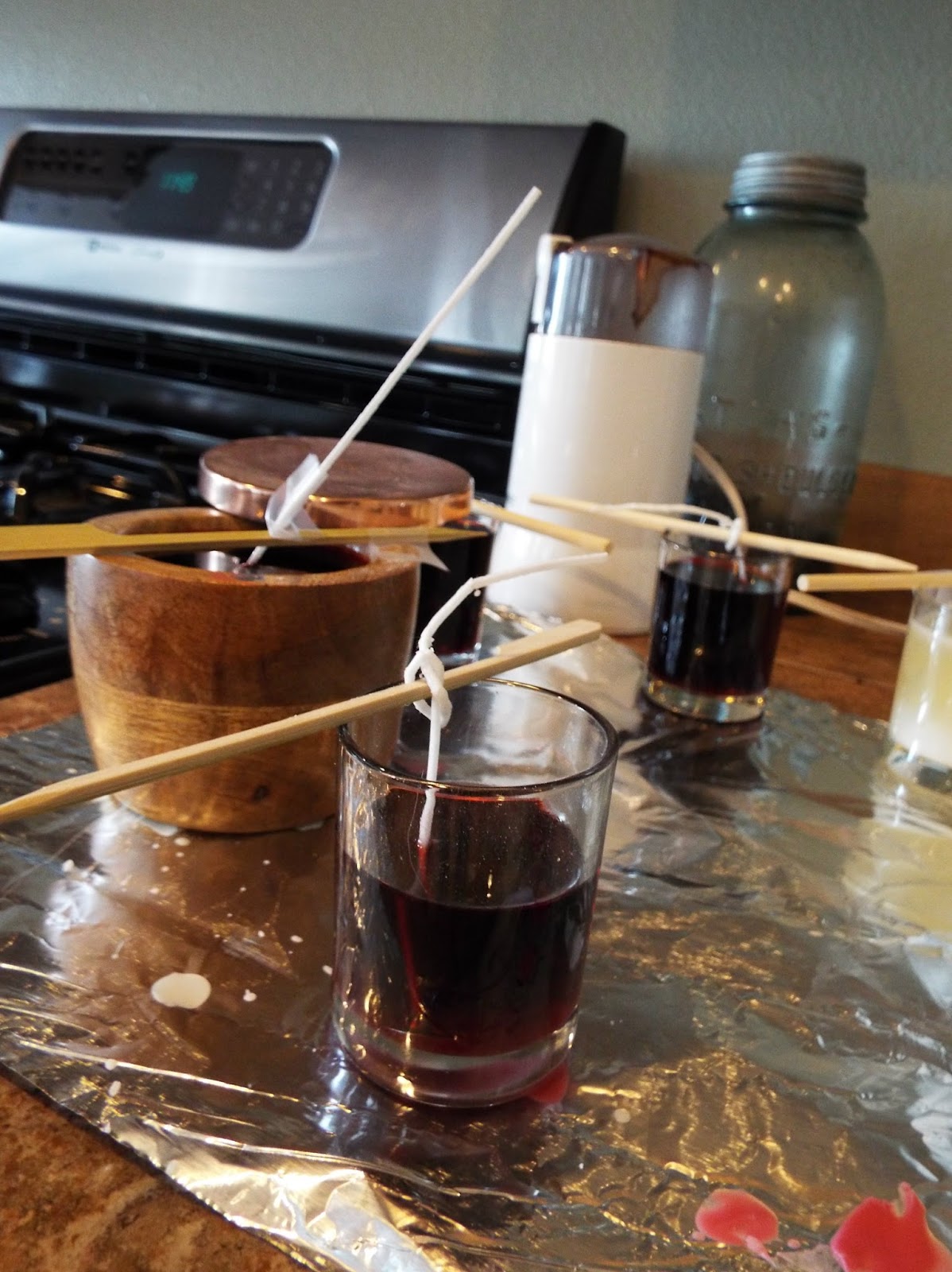
Step 1: Set up the wicks so that they stand up straight. This will ensure that they're straight when you pour in the wax. We used tape and a skewer on one batch, and tied the wick around the skewer for the other batch.
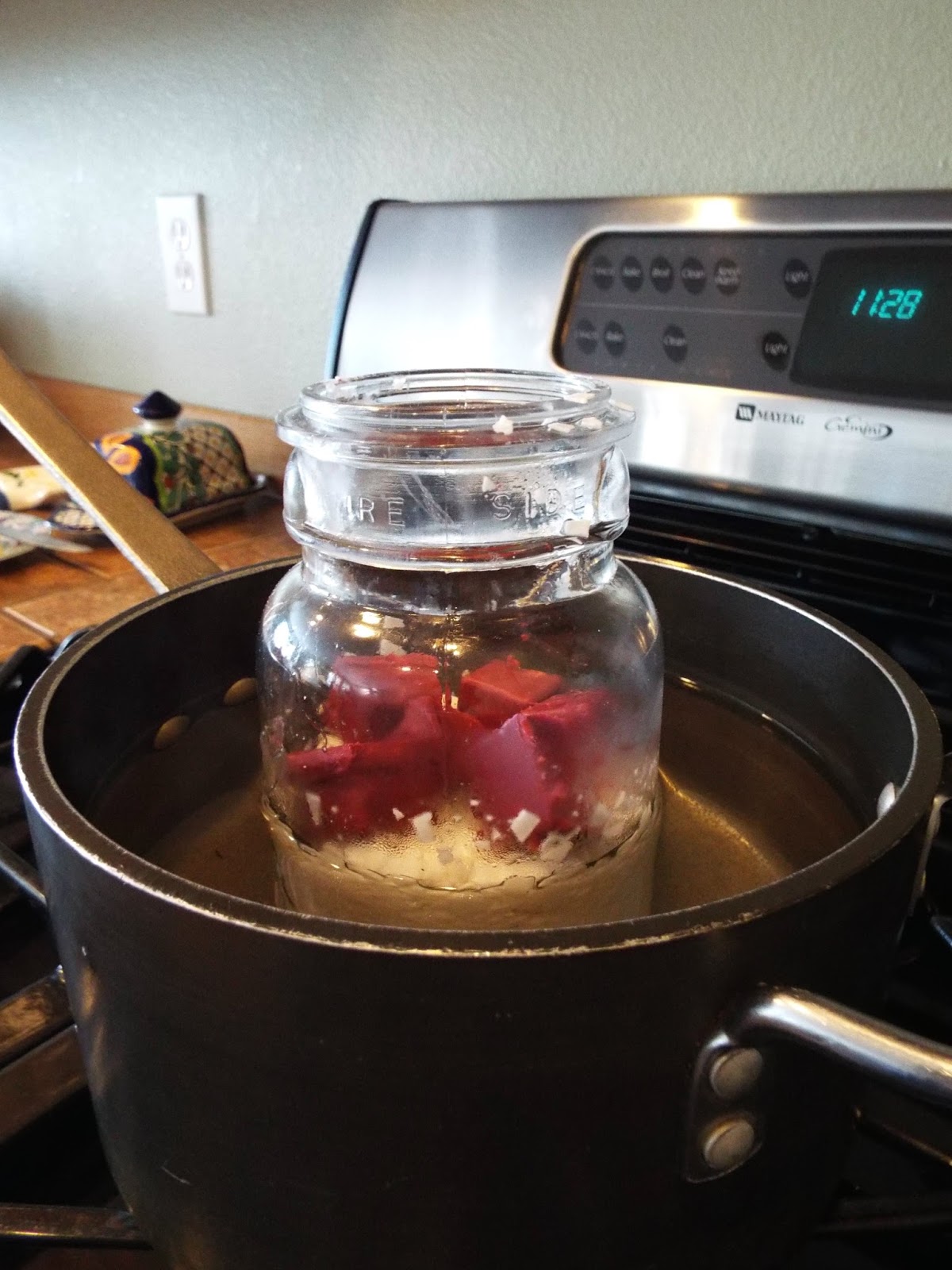
Step 2: Melt the wax. We did this by submerging a large glass of wax into a pot of boiling water. When the wax is mostly melted, put 2-3 drops of the fragrance oil into the wax and stir it around.
Step 3: Pour the wax into the containers. Make sure to do it over a piece of newspaper or aluminum foil so the wax doesn't get everywhere. The wax stops being hot pretty quickly, but takes about 12 hours to cool completely into solid form.
This time around, I used scented wax cubes along with the wax flakes to give the candles a scent without the oil. I used about 2/3rds wax flakes and 1/3rd wax cubes to ensure a strong but not overwhelming scent.
Here's what the wicks look like tied around the skewers. When the wax cools, cut the wicks clean off.
And voila! Some beautiful scented candles! They were pretty expensive to make, but the ones in the fancy containers were worth it– those can be $25+ at the store.
Categories:
decor
,
diy
,
diy review
,
home
,
tutorial
Thursday, May 19, 2016
DIY Review: Succulent Cork Planters
I love succulents. They are so cute and easy to take care of. Unfortunately, I've killed a couple of them on accident. So, I was on the lookout for an easier way to plant and have succulents in my place. This cork planter DIY from Upcycle That seemed like the perfect solution. So, I had a couple friends over to put this tutorial to the test.
Materials:
- Wine, prosecco, or champagne corks (as many as you want!)
- A screwdriver, small knife, or Swiss Army knife
- Soil
- Succulent clippings (one or two per cork): we cut ours from succulents growing around the neighborhood, so don't feel the need to go out and buy an entire plant to use for this project.
Step 1:
Carve a small hole in the top of the cork. It needs to go about halfway down so you have enough room for soil and a succulent clipping. The original tutorial has more details about how to make this hole; we kind of just freehanded it.
Step 2:
Fill the hole with soil.
Step 3:
Plant your succulent! Make sure to pack down the soil around the succulent so it doesn't fall out and is able to grow roots.
Voila! The tutorial includes attaching magnets to the corks, but we didn't want to do that. Instead, we left some of them to stand on the windowsill, and wrapped wire around others to make little hangers that can hang from the wall or the ceiling.
This was by far one of the easiest and most rewarding DIYs I've ever done. I strongly recommend it to anyone looking for a craft to do or an easy DIY gift.
Categories:
a broke girl's guide
,
art
,
diy
,
diy review
,
friends
,
home
,
plants
Thursday, April 7, 2016
DIY Review: Wine and Beer Bottle Vases
Last weekend, I hosted a craft night to turn a couple everyday recyclable items into treasured pieces of decor. I invited some friends to come over with any glass bottles or jars they had to color and glitter them with a little Pin-spiration.
The supplies:
Martha Stewart Crafts® Multi-Surface Satin Acrylic Craft Paint– I got a couple of these in a Her Campus Survival Kit a couple months ago, and this was the perfect opportunity to use them. They were a little too thick for this project, so I'd recommend using a lighter body brand of paint or watering this paint down.
Liquitex Soft Body Acrylic Paint– I use this paint for everything from crafting to painting. Water it down just a little bit to create the ideal texture.
Gloss-finish Modge Podge glue– This is some of the best crafting glue out there, and worked perfectly for applying the glitter.
Like, way too much glitter– Pros: glitter is amazing. Cons: our apartment now has glitter everywhere. Even the dogs are still shaking glitter out of their fur.
Glitter glue– We used this to glitter-ify the candles and as a 3D effect on the bottles.
Tapered candles– Make sure you measure the width of the wine bottle opening to make sure the candle will fit! We had to whittle ours at the base because they were too big.
Step 1: Remove the stickers from the bottles. We did this by filling the sink with hot, bubbly water and leaving the bottles to soak for 10-20 minutes. It worked on all but two of the bottles.
Step 2 (colored bottle): Following a tutorial from SITSgirls, we poured the paint into the bottle and swirled it around to spread it out equally. Pros: Picking up the bottle didn't smear the paint, and it made for a cleaner-looking finish. Cons: It took a lot more paint than we were expecting (don't listen when the tutorial says "a couple tablespoons"). Plus, it was hard to get it to spread evenly!
Step 2 (glittered bottle): Following a tutorial from Hustle + Halcyon, we coated bits of the bottle with Modge Podge, which we then covered with glitter. Pros: This was super easy and worked really well! Cons: There was glitter everywhere.
Even our dogs got in on the fun!
The final products! We used a combination of both DIYs on all but one of the bottles. I love how unique each one ended up looking; especially with the mixture of colors.
All-in-all, our first craft night was a huge success! It was so much fun and a great way to reuse something we all have lying around.
Monday, February 15, 2016
DIY Review: How to Tuck In a Shirt
I almost exclusively own high-waisted bottoms, which means that I'm always tucking my shirts on. It works out fine as long as the shirt is fairly fitted. However, in the case of most of my button-downs, tucking simply doesn't seem to work. So, I looked up a way to tuck in a button-down so that it would actually stay put.
Pre-DIY: see? Totally baggy!
Step 1: Unbutton pants and place the base of your shirt neatly downward. Your shirt should not be scrunched into your pants as they’ll easily come untucked.
Step 2: Pinch the shirt at the side-seams and pull tight to collect the excess fabric.
Step 3: Fold this excess fabric backwards. You want both back and front of your shirt to sit flush against your body; no bunching (you haven’t pinched enough fabric) nor pulling (you’ve pinched too much fabric).
Step 4: Button your pants up, tightly securing the folds against your body.
Step 5: Adjust if necessary to neaten the shirt.
Ta-da! Kind of better. I bet this would've worked better with either a thicker shirt or one that's a little more form-fitting. It did take a bit longer for the shirt to become baggy using this method, but it still became baggy eventually.
Categories:
diy
,
diy review
,
professional
,
style
Subscribe to:
Comments
(
Atom
)